
45 min
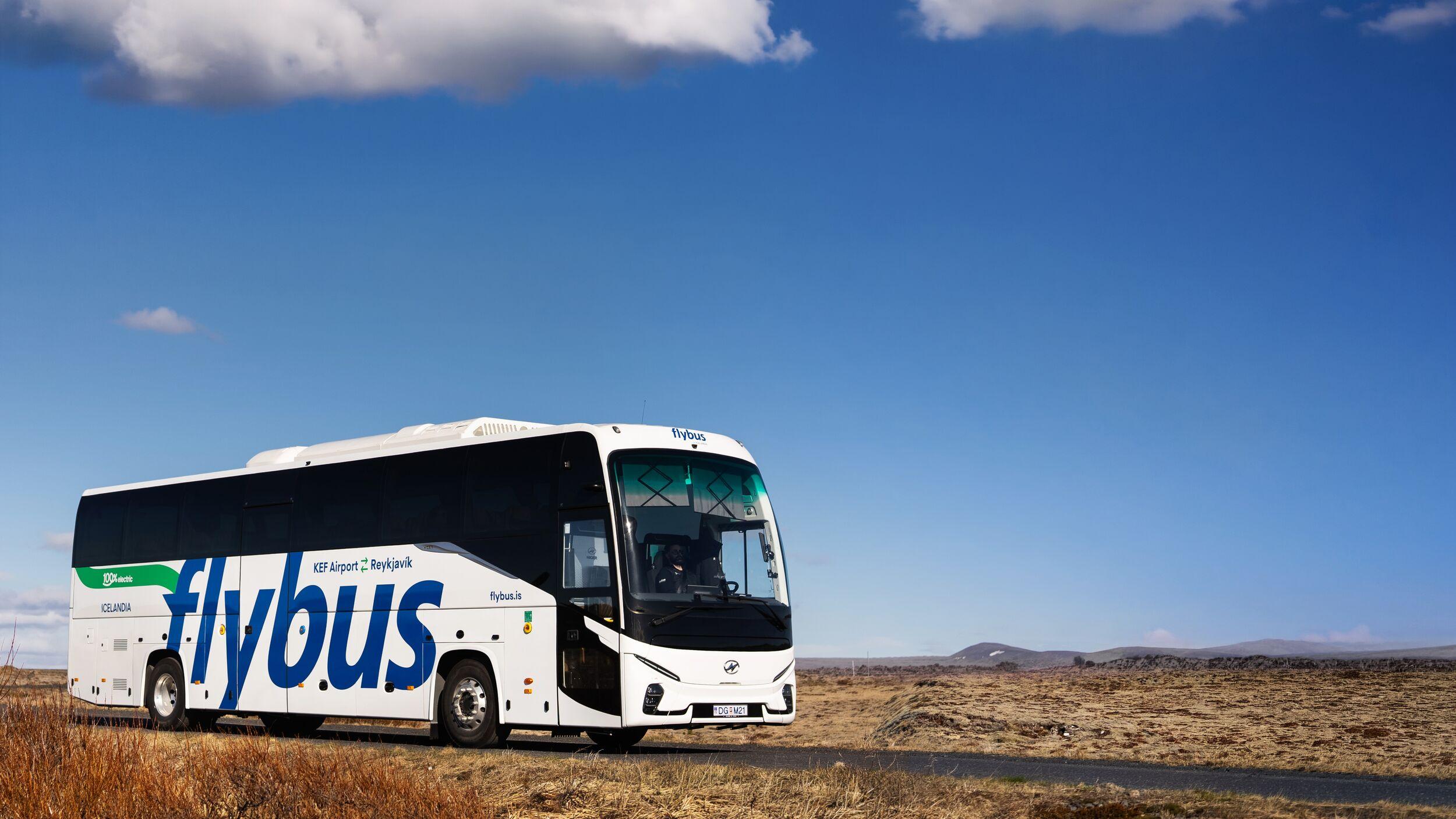
Keflavik Airport Bus Transfer to Reykjavik
Direct shuttle service linking KEF Airport with central Reykjavik hotels and BSI Terminal
Reserve
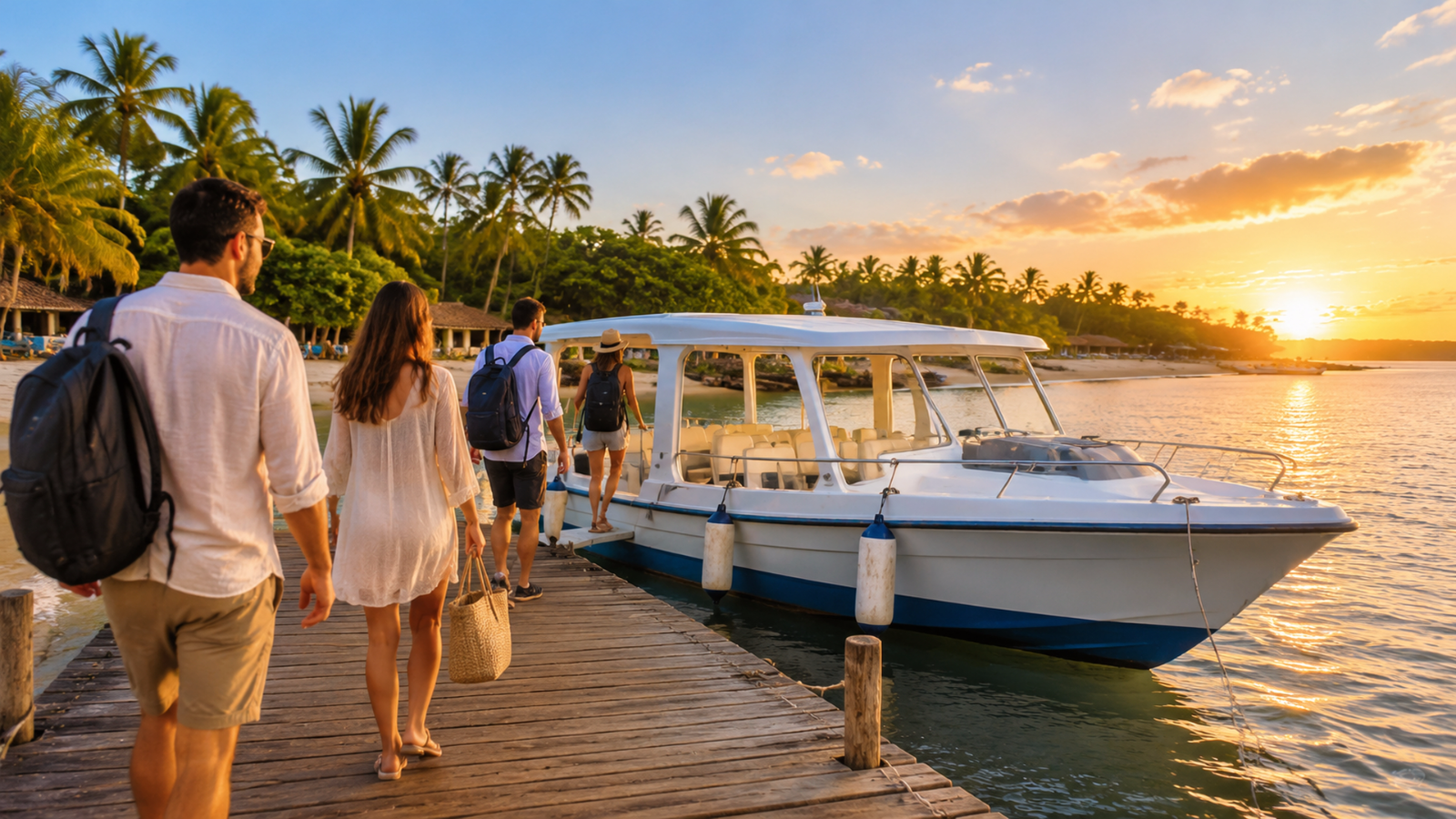
Morning departures across open Atlantic water, two and a half hours to car-free sand.
Hand-picked by our editors — only the best 3 direct routes from 14 operators reviewed.
Verified partners for every tour, free cancellation where available, and instant confirmation on every booking.
45 min
Direct shuttle service linking KEF Airport with central Reykjavik hotels and BSI Terminal
Reserve
Soak in Iceland's legendary geothermal waters with towel, drink, and silica mask included
Reserve
2 hr 30 min
Soak in an oceanfront infinity pool with a 7-step ritual and transport from Reykjavik's city center
ReservePrices from verified partners. Availability updates in real time at checkout. Free cancellation policies apply where shown.
The landmarks, rooms, and views travelers on this tour remember — all visible on a single visit.
The primary entry point for passengers arriving via transfer salvador boipeba lancha tours. It serves as the main logistical hub for the island.
A walking trail connecting the arrival pier to the center of the village. This path is used by all visitors during their first transfer salvador boipeba lancha visit.
Home to the local church, providing a high vantage point for viewing the incoming boats. It overlooks the coast where the transfer salvador boipeba lancha docks.
Accessible from the village, these ecosystems are a key feature of the island landscape near the boat docks.
Expansive stretches of sand starting from the main landing area of your transfer salvador boipeba lancha tour.
The direct maritime route is faster and provides a more direct connection to the island, while the bus and boat option offers a cost-effective alternative for travelers who prefer minimizing time on open water.
| Feature | Top pick Speedboat Transfer | Semi-Terrestrial Transfer |
|---|---|---|
Travel Time |
2.5–3 hours | 5–6 hours |
Comfort Level |
High; seated inside cabin | Moderate; requires multiple vehicle transfers |
Scenic Value |
Direct ocean views | Includes coastal highway transitions |
Departure Frequency |
Limited daily slots | Frequent scheduled departures |
Luggage Constraints |
Limited space; soft bags preferred | Higher capacity for large suitcases |
| See tickets → |
Verdict: Most visitors seeking efficiency prefer the transfer salvador boipeba lancha, whereas those prioritizing flexibility often choose the semi-terrestrial route as a reliable transfer salvador boipeba lancha tour alternative, even if it requires securing transfer salvador boipeba lancha tickets through different logistics providers.
Choose your ticket, select your date, and reserve in under two minutes. Secure checkout handled by our verified partner.
Instant confirmation by email, with a mobile voucher you can save offline. No printing, no queuing at a collection desk.
Arrive at the entrance, show your voucher on your phone, and walk in. Most tickets include priority or skip-the-line access.
Practical details for your visit straight from our verified partners — hours, access, rules, and how to get there.
Av. da França, s/n
Main hub for transfer salvador boipeba lancha tours.
Direct transfer to the maritime terminal in Salvador.
The speedboats operate as the primary transfer salvador boipeba lancha service.
Wear light, quick-drying clothing and water-resistant footwear suitable for boat boarding. A hat and UV-protection clothing are advised for the open-sea crossing.
Passengers are limited to one medium-sized suitcase and a personal bag due to limited space on the vessel. Secure all electronics in waterproof dry bags during the transit.
Photography is permitted throughout the journey on the speedboat. Please ensure your device is secured against sea spray and motion.
Transfer via speedboat involves steps and potentially uneven boarding platforms at the dock. Guests with limited mobility should contact the operator for specific assistance during the boarding process.
Children are welcome on the transfer salvador boipeba lancha with appropriate life jackets provided for all ages. Ensure small children are accompanied at all times during the transit.
No food is served during the transfer salvador boipeba lancha trip. We recommend bringing bottled water for the journey.
Av. da França, s/n
Main hub for transfer salvador boipeba lancha tours.
Get directionsBest time to go, insider tips, nearby landmarks, and the cancellation fine print — flip through to skim what matters to you.
How crowds, weather, and events shift across the year.
September offers moderate temperatures and lower precipitation. Ideal for booking your transfer salvador boipeba lancha tour early in the day.
Small details that turn a good visit into a great one.
Aim to arrive during the 08:00–11:00 window to ensure the calmest sea conditions. This helps your transfer salvador boipeba lancha feel smoother.
Take motion sickness medication 30 minutes before departure if you are sensitive to ocean travel. Keep your transfer salvador boipeba lancha tickets accessible for boarding.
Non-bookable sights within a short walk — free to visit, easy to pair.
Main beach area near the arrival point for a transfer salvador boipeba lancha.
Historic colonial church located on the main village hill.
Flexible, no hidden fees.
Full refunds are available for cancellations made 48 hours prior to departure. No entrance fee of 0 BRL is charged for the island.
Hand-picked options within walking distance — pick a district for vibe, or a specific hotel for convenience.
Coastal accommodation near the landing site.
Central district for various island guest houses.
The 60-nautical-mile crossing from Salvador's Terminal Marítimo Turístico to Boipeba's Moreré jetty is the only direct speedboat route that bypasses Morro de São Paulo entirely. Lancha operators began running the route in 2003, cutting what had been a five-hour bus-ferry-taxi chain into a single 2.5-hour open-water passage. The service exists because Boipeba has no road bridge and no airstrip — every visitor, every bag of cement, every crate of produce arrives by water. The fleet is small. Six licensed operators run fifteen fiberglass lanchas between them, each seating 28 to 35 passengers on padded benches under a canvas canopy. Engines are twin Yamaha or Mercury outboards, 150 horsepower each. Captains time departures to the tide: low water exposes the sandbar at Moreré's landing, forcing boats to anchor offshore and transfer passengers by dinghy. Morning departures leave Salvador between 8:00 and 9:30, when the Baía de Todos os Santos is still flat and the Atlantic swell hasn't built. Return boats leave Moreré at 14:30, reaching Salvador before the evening chop. The route threads the Tinharé-Boipeba archipelago's western shore, passing Morro's lighthouse, the mangrove channels of Garapuá, and the open reef line that protects Boca da Barra. Passengers see no towns after the first twenty minutes — only unbroken Atlantic forest rising behind white sand. The lancha slows once, at the reef gap where the Inferno River meets the sea, then cuts east into the lagoon that separates Boipeba from Tinharé. Moreré's dock is a single concrete pier with a blue-painted fish market at the landward end. Weather cancels the crossing roughly twelve days a year, almost all between May and August when cold fronts push north from the South Atlantic Convergence Zone. Operators monitor wind speed at Ponta do Curral; anything over 22 knots keeps the fleet docked. When the route runs, it is the fastest way onto an island where no vehicle larger than a wheelbarrow is permitted, and where the only lights after nightfall are kerosene lamps and the occasional solar panel glow.
"Every visitor, every bag of cement, every crate of produce arrives by water."
A step-by-step walkthrough of the visit — what you'll see, how long each stage takes, and the details that matter.
You board at Salvador's maritime terminal, a low concrete building wedged between the Mercado Modelo and the ferry docks. Check-in opens one hour before departure; a clerk in a plywood booth writes your name on a manifest and hands you a numbered paper stub. You walk down a steel gangway onto a floating platform where three lanchas idle, their engines burbling diesel exhaust across the water. Your boat is the one with the blue canopy. You choose a seat near the stern, stow your bag under the bench, and watch the crew untie the bow line. The captain guns the engines and the boat lurches forward, clearing the harbor wall in under three minutes. Once past the Forte de Santo Antônio, the lancha opens up — 35 knots, the bow lifting, spray arcing over the canopy's edge. The city shrinks behind you. Morro's hill appears ahead, green and conical. You pass it on the port side, close enough to see the chapel on the summit. The last house disappears. For the next ninety minutes you see only forest and reef. The boat slows once, threading a gap in the coral, then accelerates again. At Boca da Barra the captain cuts the engines and lets the lancha drift for thirty seconds while he checks the depth. Then he turns east into the lagoon. Moreré's pier is a single line of concrete pilings ahead. You step off onto warm wood, your bag handed up by a deckhand, and the boat is already reversing back toward open water.
The service operates daily within the hours of 00:00–23:59. Please verify specific boat departure times with your operator.
Entry to Boipeba Island is 0 BRL as no island conservation fee is charged upon arrival.
You can secure your transfer salvador boipeba lancha tickets directly through the provided booking platform.
Yes, children are welcome on the transfer salvador boipeba lancha with provided safety equipment.
The best arrival window is 08:00–11:00 for optimal sea conditions.
The transit duration for your transfer salvador boipeba lancha tour is approximately 150 minutes.
Cancellations made 48 hours in advance are eligible for a full refund.
Yes, please limit baggage to one suitcase per person for your transfer salvador boipeba lancha.
Yes, the Boca da Barra beach and the local village church are within walking distance of the landing site.