
45 min
Keflavik Airport Transfer to Reykjavik
Direct shuttle service connecting KEF Airport with downtown Reykjavik and BSI Terminal in 45 minutes
Reserve
Catamaran through the Baía de Todos os Santos, van across Tinharé, then a final skiff to shore.
Hand-picked by our editors — only the best 3 transfer operators from 11 reviewed.
Verified partners for every tour, free cancellation where available, and instant confirmation on every booking.
45 min
Direct shuttle service connecting KEF Airport with downtown Reykjavik and BSI Terminal in 45 minutes
Reserve
45 min
Skip the taxi queue with a personal driver who meets you at arrivals and whisks you to your hotel in comfort.
Reserve
45 min
Direct private transport between Keflavík Airport and your Reykjavík accommodation with professional driver
ReservePrices from verified partners. Availability updates in real time at checkout. Free cancellation policies apply where shown.
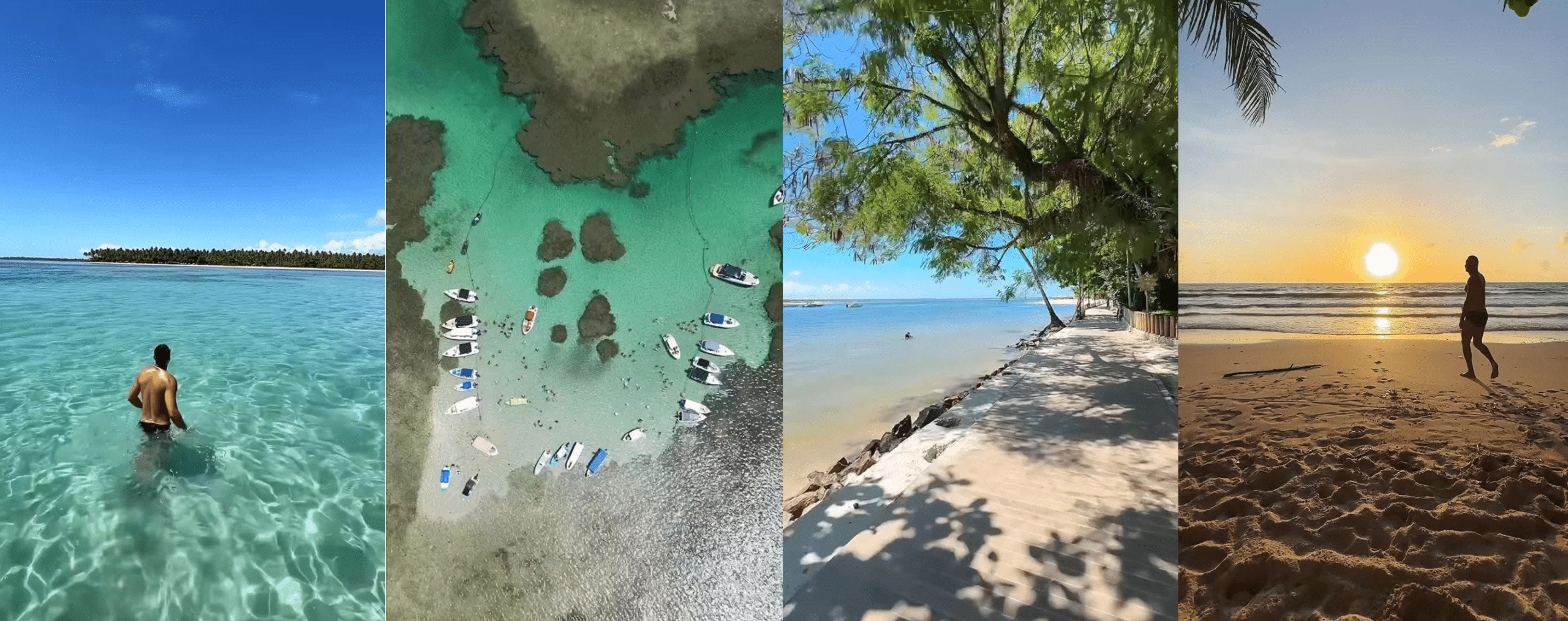
The landmarks, rooms, and views travelers on this tour remember — all visible on a single visit.
The main entry point where the Rio do Inferno meets the sea, offering immediate access to local village life.
The multi-modal transit is the optimal choice for budget-conscious travelers, while the air taxi serves those prioritizing speed; they complement each other, though frequent travelers often call the land-sea route more immersive. By selecting the transfer semi terrestre salvador boipeba, you integrate local transport stages across the Bahia coastline.
| Feature | Top pick Semi-Terrestrial Transfer | Air Taxi |
|---|---|---|
Total Duration |
4.5–6 hours | 30–45 minutes |
Cost |
150–250 BRL | 1,200–1,800 BRL |
Scenic Value |
High (coastline views) | Extreme (aerial views) |
Luggage Restrictions |
Standard carry-on/baggage | Strict weight limits (15kg) |
Comfort |
Moderate (multi-vehicle) | High (private/semi-private cabin) |
Transit Type |
Boat and bus | Direct flight |
| See tickets → |
Verdict: Those seeking the transfer semi terrestre salvador boipeba tours value affordability and coastal scenery, whereas the air taxi provides efficiency for premium travel budgets.
Choose your ticket, select your date, and reserve in under two minutes. Secure checkout handled by our verified partner.
Instant confirmation by email, with a mobile voucher you can save offline. No printing, no queuing at a collection desk.
Arrive at the entrance, show your voucher on your phone, and walk in. Most tickets include priority or skip-the-line access.
Practical details for your visit straight from our verified partners — hours, access, rules, and how to get there.
Salvador, Bahia
Primary departure point for boat leg
Direct booking to coordinate land and sea legs
Casual beachwear is standard. Comfortable, light clothing and sturdy sandals are recommended for the transfer semi terrestre salvador boipeba process.
Travel light, as you will move between vehicle and boat legs. Porter services are available at the Boipeba pier to transport luggage to your pousada via handcart.
Photography is encouraged throughout the scenic transfer semi terrestre salvador boipeba tour, especially during the speedboat crossing through the mangroves.
The island is car-free and features sandy terrain, which may be challenging for wheelchair users. Contact your pousada in advance for specialized assistance.
Mobile signal is available but can be intermittent in the mangrove areas during the transit. Portable chargers are helpful for long travel days.
Families are welcome, though the multiple transit stages require patience. Ensure children are supervised during the boat segments.
Bring snacks and water for the journey. Fresh local seafood and refreshments are abundant in Velha Boipeba upon arrival.
Pets are generally permitted on transfers with advance notice, provided they are in appropriate travel crates for the boat and vehicle legs.
The transfer semi terrestre salvador boipeba relies on tides; always confirm departure times with your operator 24 hours prior.
Best time to go, insider tips, nearby landmarks, and the cancellation fine print — flip through to skim what matters to you.
How crowds, weather, and events shift across the year.
September–November offers pleasant temperatures and fewer crowds for your transfer semi terrestre salvador boipeba tickets.
Small details that turn a good visit into a great one.
Reserve your transfer semi terrestre salvador boipeba tours well in advance, especially for weekend travel.
Non-bookable sights within a short walk — free to visit, easy to pair.
The arrival point and main beach in Velha Boipeba.
Flexible, no hidden fees.
Cancellation rules depend on your specific operator. Most services allow full refunds if requested within the specified window, usually 48 to 72 hours before departure.
Hand-picked options within walking distance — pick a district for vibe, or a specific hotel for convenience.
Primary hub for most pousadas and restaurants.
The transfer semi terrestre Salvador Boipeba covers 100 kilometres in three distinct segments, threading through the archipelago of Tinharé and Boipeba via a choreographed handoff between catamaran, van, and motorised skiff. The route was formalised in the early 2000s when road access to Morro de São Paulo reached maturity, allowing operators to split the journey and bypass the direct four-hour open-water crossing that remains vulnerable to seasonal swells. The first leg departs Salvador's Terminal Marítimo and crosses the Baía de Todos os Santos, a sheltered estuary named by Amerigo Vespucci in 1501 for its discovery on All Saints' Day. The catamaran ride lasts ninety minutes, threading between the islands of Itaparica and Vera Cruz before docking at Morro de São Paulo, the commercial hub of Tinharé Island. From the Morro de São Paulo pier, passengers transfer to a van for the overland segment. The vehicle follows a narrow laterite track that bisects Tinharé Island lengthwise, passing through secondary-growth Atlantic forest and the villages of Garapuá and Canavieiras. The road was graded in phases between 1998 and 2003, financed by the state of Bahia to support eco-tourism infrastructure across the archipelago. Travel time is forty-five minutes under dry conditions; during the November-to-March rainy season, stretches near Garapuá can hold standing water that adds fifteen minutes to the crossing. The van terminates at Ponta do Castelhano, the southernmost vehicle-accessible point on Tinharé. The final leg is a fifteen-minute open-water crossing aboard a fibreglass skiff, locally called a voadeira. These vessels carry six to ten passengers and their luggage, navigating the shallow channel between Tinharé and Boipeba proper. Tides dictate departure intervals; at low water, boats must take a wider arc to avoid submerged sandbanks that shift with each lunar cycle. The skiff lands at Velha Boipeba, the island's primary settlement, where no wheeled vehicles operate beyond hand carts. This tripartite routing remains the standard for budget-conscious travellers, priced at roughly half the direct speedboat charter from Salvador and delivering passengers to the island by mid-afternoon when departures respect the early-morning catamaran schedule. The semi-terrestre model has been adopted across Brazil's coastal islands wherever road networks permit, reducing fuel costs and shortening open-water exposure for operators without compromising the visitor's arrival within a single calendar day.
"The semi-terrestre route splits the journey into three segments, bypassing the direct open-water crossing vulnerable to seasonal swells."
A step-by-step walkthrough of the visit — what you'll see, how long each stage takes, and the details that matter.
You board the catamaran at Salvador's Terminal Marítimo shortly after dawn, stowing your pack beneath the moulded bench seat as the twin engines rumble to life. The vessel clears the harbour breakwater within ten minutes, and you watch the colonial skyline of Pelourinho recede into the haze. Ninety minutes later, the boat noses into Morro de São Paulo's wooden pier, where a driver holds a laminated placard with your transfer operator's logo. You climb into the back of a Fiat Doblò van, sharing the space with five other passengers and a stack of provisions bound for Boipeba's pousadas. The van rolls south along the island's spine, its suspension absorbing the corrugations of the laterite road. You pass through Garapuá, a cluster of brightly painted houses set back from the track, and continue into dense forest where the canopy closes overhead. At Ponta do Castelhano, the driver unloads your luggage onto a narrow dock, and you step aboard a fibreglass skiff idling in waist-deep water. The pilot throttles up, and the boat skims across the channel, salt spray misting your forearms. Fifteen minutes later, you step onto the sand at Velha Boipeba, your shoes in hand, and walk the final fifty metres to the village square. The three-stage transfer semi terrestre Salvador Boipeba journey has delivered you from urban Bahia to an island with no cars, no ATMs, and no paved roads by early afternoon.
The journey typically takes approximately 5 to 6 hours depending on connection times and weather.
No, there is 0 BRL entrance fee for Boipeba; visitors do not pay to enter the island.
Yes, you can secure your transfer semi terrestre salvador boipeba tickets online via authorized travel operators.
The best arrival window is between 06:30–14:00 to ensure enough daylight for the transit.
No, Boipeba is car-free; you will use sand paths and local tractor-taxis upon arrival.
Contact your transfer semi terrestre salvador boipeba operator immediately, as they manage the multi-modal logistics.
Yes, the transfer semi terrestre salvador boipeba process is family-friendly, though multiple transit legs require supervision.
Yes, but please pack responsibly as you will move luggage between vehicle and boat legs.
Yes, a complete transfer semi terrestre salvador boipeba includes all land and sea transport segments arranged for you.
Yes, you can easily combine your trip with visits to the historic village of Cairu or nearby beaches like Moreré.